Time Study Field Log
Practice-Based Visual Research into Timekeeping
A practice based self -directed art residency on the the topic:
What does time mean to me ?
These examples of. my time study field log show how I approach a practice based research project, from inception , through progression, how an initial idea about the story of an ornate French mantle clock forms the basis of an entire history of timekeeping art residency.
Meticulously recording Captured as it unfolds through observation, visual documentation, and hands-on site -specific responsive art making are the main focus of my practice.. I am documenting both daily , sometimes weekly summaries and monthly progress logging can help support a larger interdisciplinary body of timekeeping research.
How a visual field log
supports site-specific research
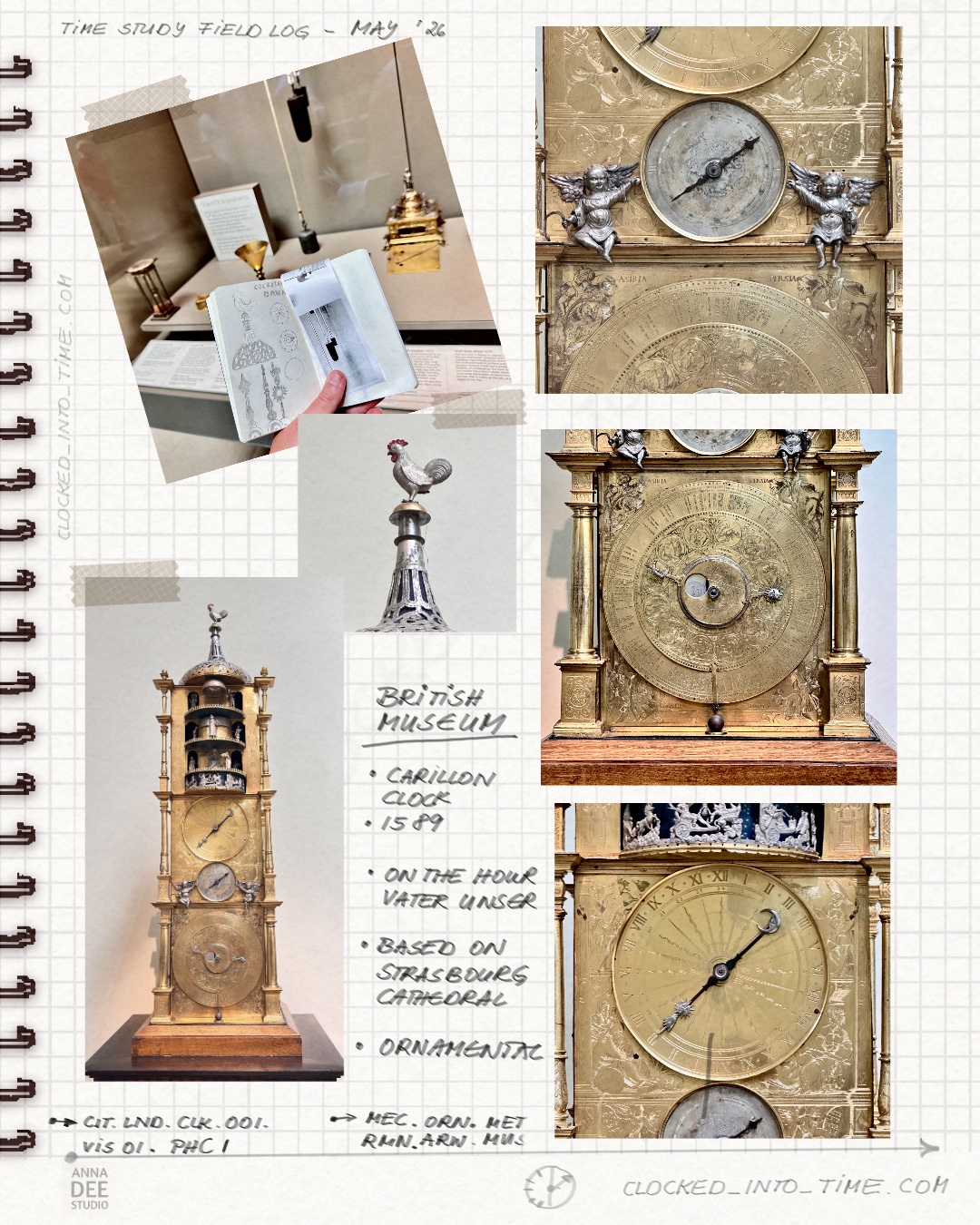
- hands on primary research documented not just with photography or literature, but on-site sketches, visual note taking and immediate creative responses
- documenting the collecting of source materials
- id possible taking relief prints, making contact impressions, collecting found objects, materials, to connect the research to a physical sense of place
The field log provides a structured way to:
- Record observations while they are still fresh and immediate.
- Document encounters with clocks, watches, sundials, monuments, inscriptions, and other time-related artefacts.
- Capture sketches, photographs, measurements, annotations, and visual comparisons that arise after the first sketched annotations have been added that might lead to a new idea that can be immediately realised in a site-specific setting.
- It allows for separation of direct observation from later creative interpretation and contemplative reflection, given a possible entry way to a first impression to considered response approach
- Can trace how ideas develop across days, weeks, months, and longer periods of study with visual clues reminders aiding the recall process
- Preserve direct impressions that may later support research, writing, or creative work.
- Build connections between objects, places, histories, symbols, and recurring themes.
Why practice-based creative responses
in a time study field log matter
- in a practice based time study the field log becomes a constant companion capturing not just immediate ideas and observations but also create responses that occur on-site
- This allows for a certain immediacy of an idea to be captured, loosely, spontaneously or if time allows in a more considered approach
- Proximity to the timekeeping object lets me develop a dialogue that is equally inspired by the object itself but also my relationship to it in place
- site specific research can be extended when actively engaging with for instance a sundial in both sunny weather and then again a dusk, letting me form alternative viewpoints
- Through visual documentation, art responses
How does the Visual Field Log
differ from the Timekeeping Archive ?
- Although closely connected, the Field Log and the Timekeeping Archive serve different purposes.
The building of a searchable archive featuring visited sundials, studied sand clocks, the variety of public clocks from railway to marine locations will ve central to this site. Where to travel to , searchable by location while hopefully formulate a scholarly resource with worthwhile museum horology collections for researchers, art students and enthusiastic fans of the history of timekeeping,.
The Field Log
Pocket Size Sketchbook
|
Digital Hybrid
|
|
|
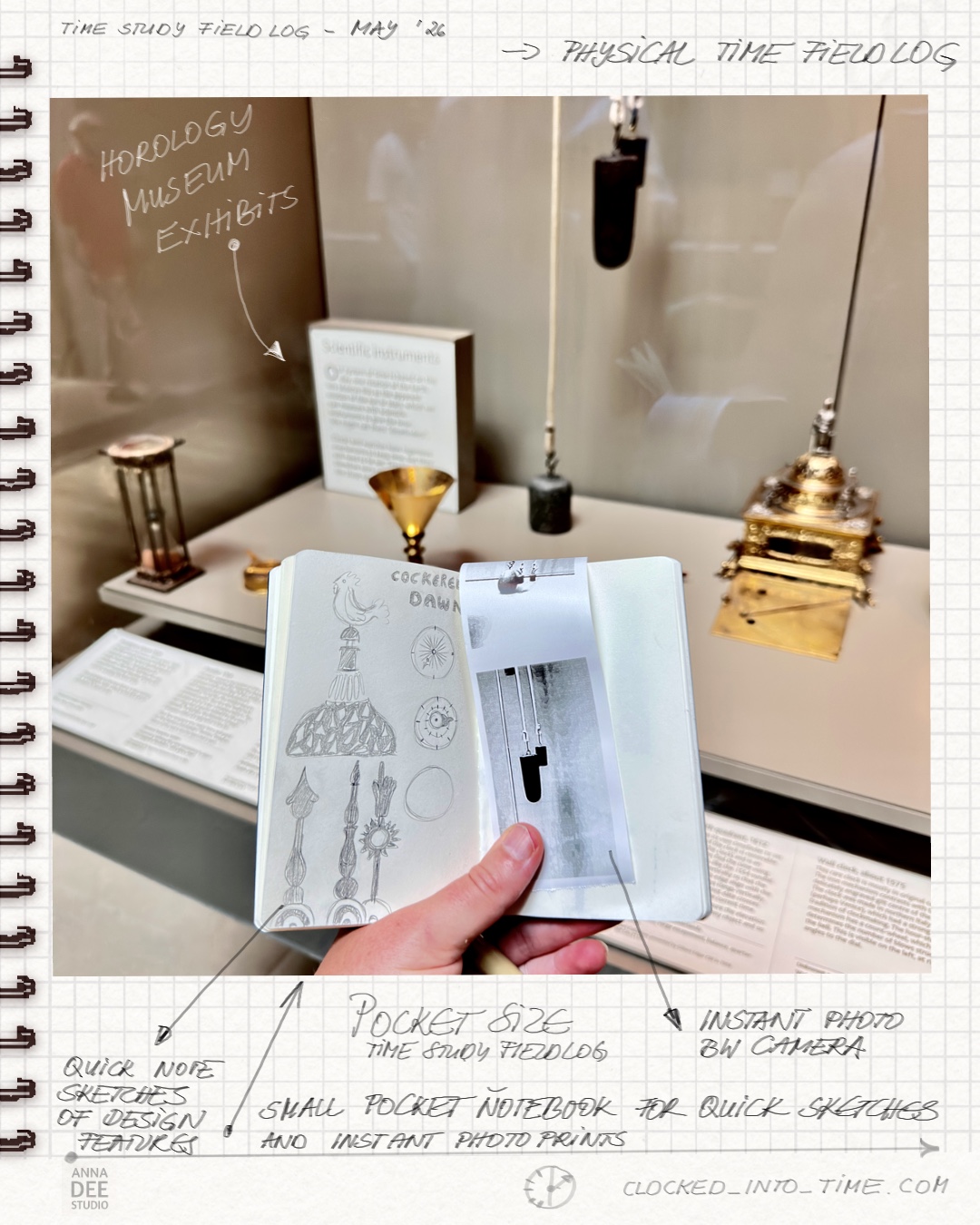
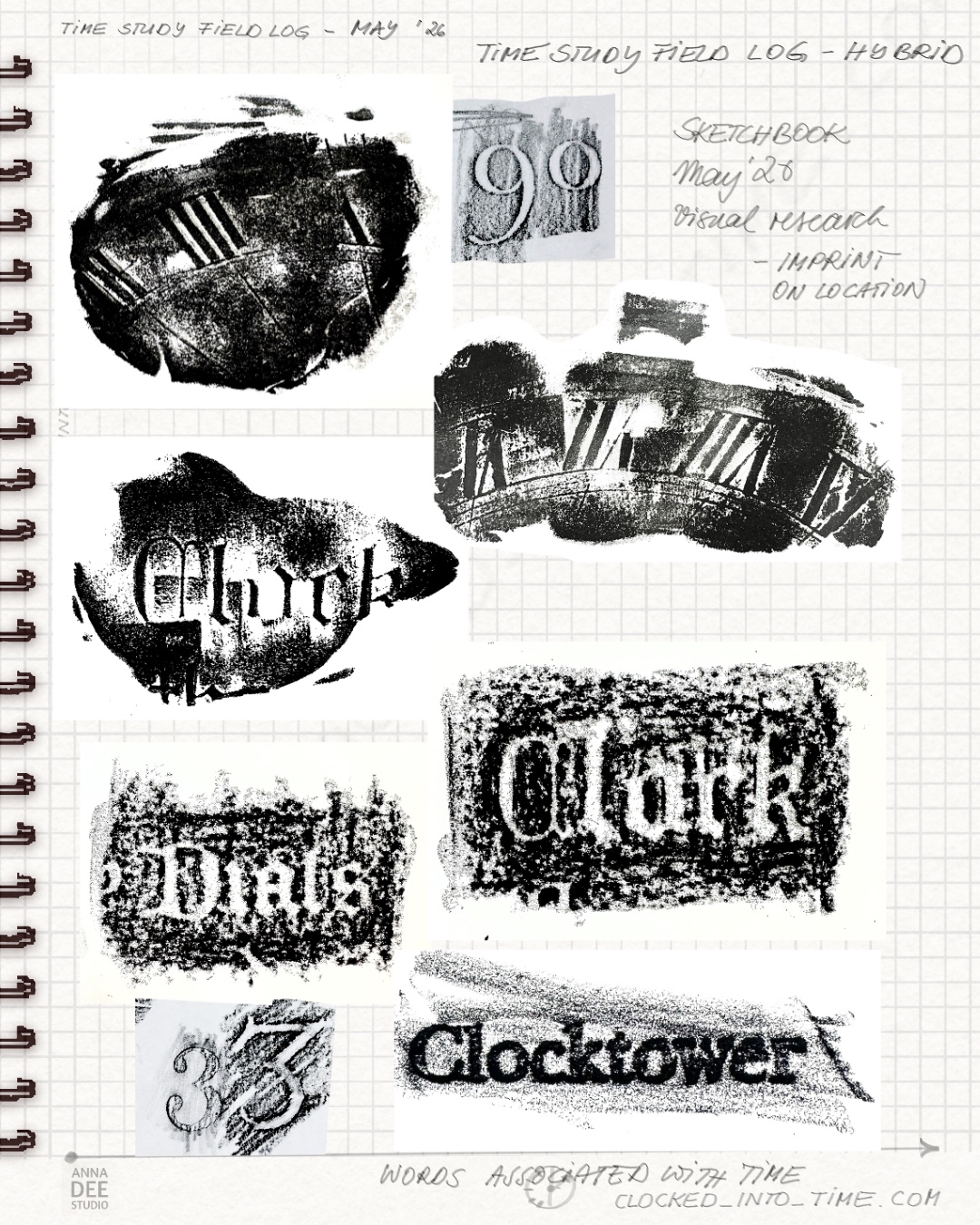


The Field Log is the active workspace of the project.
It contains:
- raw data from immediated direct observations in the field
- site specific hand written notes.
- sketches, print impressions, collected visual ephemera and photographs.
- annotated questions that arise during study, uncertainties Followed up on and documented
- fresh capturing of I’mmerging interpretations.
- noting opportunities for comp[arision and direct follow up if the opportunity arises on site, fieldlog as a constant companion
- first experimental ideas and creative responses are added as material and access allow, captured in an unrefined, unaltered state to make to most of retaining a sense of place, context, and situational variances.
The Archive
The Archive is the organised long-term searchable and navigable record of the time study
It contains:
- Refined documentation.
- Indexed references.
- Completed research records.
- Cross-referenced materials.
- Resources intended for future retrieval and comparison.
So simply put , the time study field log captures the journey as it happens. the timekeeprs archive preserves the record as an accessible resources for fellow horology enthusiasts. .
WEEKLY / MONTHLY
Time Study Field Log
Monthly Field Log
- With my monthly field log I will look at adding captures individual encounters, observations, questions, and moments of discovery as they occur Grouped into weekly segments within a monthly
CIT Time Study Field Log Monthly
return from Time study field log to What's new in my research Monthly
New Field Log Entries
This Month
New timekeeping research additions have been made this month in the following field log entries
New Timekeeping Archive
This Month
- CIT Archive